
Gitapress Gorakhpur
Shwetashwatar-Upanishad By Gita Press Gorkhpur Code 73
Shwetashwatar-Upanishad By Gita Press Gorkhpur Code 73
Couldn't load pickup availability
Shwetashwatar-Upanishad By Gita Press Gorakhpur Code 73
MRP - 45
Language - Hindi
Page - 256
Publisher - Gitapress Gorakhpur ( गीताप्रेस गोरखपुर )
श्वेताश्वतर उपनिषद् (Shvetashvatara Upanishad) कृष्ण यजुर्वेद की 'तैत्तिरीय शाखा' से संबंधित एक अत्यंत महत्वपूर्ण और प्राचीन उपनिषद् है। इस उपनिषद् के प्रवक्ता ऋषि श्वेताश्वतर थे, इसीलिए उन्हीं के नाम पर इसका नामकरण हुआ। इसमें कुल 6 अध्याय और 113 मंत्र हैं।
यह उपनिषद् इसलिए विशेष माना जाता है क्योंकि यह ज्ञान (ज्ञानयोग), भक्ति (भक्तियोग) और ध्यान ( हठयोग / योगसाधना ) का एक अद्भुत संगम प्रस्तुत करता है।
---
श्वेताश्वतर उपनिषद् का मुख्य सार व बिंदु:
1. मूल प्रश्न (मूल कारण की खोज)
उपनिषद् की शुरुआत ऋषियों के मूलभूत प्रश्नों से होती है:
इस सृष्टि का मूल कारण क्या है?
हम कहाँ से आए हैं, किसके सहारे जीवित हैं और अंत में कहाँ समा जाएँगे?
हमारे सुख-दुःख का वास्तविक कारण क्या है?
ऋषि स्पष्ट करते हैं कि काल (समय), स्वभाव, नियति, या केवल प्रकृति इस जगत के परम कारण नहीं हो सकते। इन सबके पीछे एक परम शक्ति यानी परमब्रह्म है।
---
2. त्रिक सिद्धांत (तीन तत्त्व)
इस उपनिषद् में तीन मुख्य तत्त्वों की व्याख्या की गई है:
1. भोक्ता (जीव/आत्मा): जो कर्म करता है और उसके फल भोगता है।
2. भोग्य (जगत/प्रकृति): दृश्य संसार, जो परिवर्तनशील (क्षर) है।
3. प्रेरयिता (ईश्वर/परमात्मा): जो इन दोनों पर नियंत्रण रखता है और अक्षत/अविनाशी है।
जब तक जीव खुद को ईश्वर से अलग मानता है, वह जन्म और मृत्यु के 'ब्रह्मचक्र' में फंसा रहता है।
---
3. योग और ध्यान की विधि
द्वितीय अध्याय में आत्म-साक्षात्कार के लिए योग-साधना पर विशेष बल दिया गया है:
शरीर, गर्दन और सिर को सीधा रखकर बैठना।
प्राणायाम (साँस पर नियंत्रण) और इंद्रियों को वश में रखना।
ॐ (ओम) का ध्यानपूर्वक जप और निरंतर साधना।
योग सिद्धि के शुरुआती लक्षण (जैसे शरीर का हल्का होना, चेहरे पर तेज और प्रसन्नता) का वर्णन किया गया है।
> जैसे लकड़ी में छिपी अग्नि को रगड़ने ( मंथन ) से प्रकट किया जाता है, वैसे ही ध्यान रूपी मंथन से आत्मा के भीतर ही परमात्मा का साक्षात्कार होता है।
4. ईश्वर का स्वरूप और 'रुद्र' उपासना
श्वेताश्वतर उपनिषद् में परमब्रह्म को रुद्र (शिव) के रूप में विशेष रूप से संबोधित किया गया है:
परमात्मा सगुण भी है और निर्गुण भी।
वह सूक्ष्म से अति सूक्ष्म और महान से महानतम है (अणोरणीयान् महतो महीयान्)।
वह हर जीव के हृदय में विराजमान सर्वव्यापी चेतना है।
5. भक्ति और गुरु-कृपा
यह पहला मुख्य उपनिषद् है जिसमें 'भक्ति' और 'शरणागति' शब्द का प्रत्यक्ष उल्लेख मिलता है। इसके अंतिम (छठे) अध्याय के प्रसिद्ध मंत्र में कहा गया है:
> "जिसकी परमेश्वर में पराभक्ति है और जैसी ईश्वर में है वैसी ही गुरु में है, उसी महापुरुष के हृदय में उपनिषद् के ये गूढ़ अर्थ प्रकाशित होते हैं।"
निष्कर्ष (Key Takeaway)
श्वेताश्वतर उपनिषद् का अंतिम संदेश यही है कि अज्ञान (माया) ही बंधन का कारण है। जब व्यक्ति योग, ध्यान, ज्ञान और भक्ति के माध्यम से यह समझ लेता है कि उसकी आत्मा ही उस परमब्रह्म का अंश है, तब वह संसार के समस्त दुःखों और जन्म-मरण के चक्र से मुक्त होकर अमृतत्व (मोक्ष) को प्राप्त करता है।
Here is the summary of the Shvetashvatara Upanishad in English:
---
Introduction
The Shvetashvatara Upanishad is one of the principal, ancient Upanishads associated with the Taittiriya branch of the Krishna Yajurveda. It takes its name from Sage Shvetashvatara, who taught its spiritual insights to his disciples. Comprising 6 chapters and 113 verses, this text is unique because it beautifully integrates Jnana (Knowledge), Bhakti (Devotion), and Yoga (Meditation/Practice).
---
Key Concepts & Core Message
1. The Fundamental Questions
The Upanishad begins with a gathering of spiritual seekers asking profound questions about existence:
What is the ultimate cause of the universe?
From where did we originate, by what power do we live, and where do we rest at last?
What governs our pleasure and suffering?
The text rejects time, nature, necessity, chance, or the individual self alone as the ultimate source, concluding that a Supreme Being—Paramatman (Brahman)—is the transcendent foundation behind all existence.
---
2. The Triad (The Three Realities)
The Upanishad outlines a central triad that governs reality:
1. Bhokta (The Soul / Jiva): The individual, conscious seeker who experiences actions and their fruits.
2. Bhogya (The World / Prakriti): The perishable, material universe experienced by the soul.
3. Isvara (The Supreme Lord / Controller): The eternal, imperishable ruler who governs both the self and the material world.
> Core Insight: As long as the individual soul perceives itself as separate from the Supreme, it remains bound to the cycle of birth and rebirth (Samsara). Realizing oneness with the Supreme leads to liberation.
---
3. Practical Yoga and Meditation
Unlike purely abstract metaphysical texts, the second chapter provides direct instructions on meditation and Yogic discipline:
Posturers & Breath: Keep the torso, neck, and head aligned while sitting steadily; regulate the breath through Pranayama.
Control of Senses: Draw the mind inward, focusing on the sacred syllable Om.
Signs of Progress: Describes physical and spiritual indicators of Yogic advancement, such as lightness of body, clarity of mind, and an inner glow.
> Analogy: Just as fire hidden inside wood is revealed through friction (churning), the divine Spark residing within the heart is realized through the friction of meditation.
4. Concept of God: Persona of Rudra/Shiva
The Shvetashvatara Upanishad is notable for personalizing the Supreme Reality as Rudra (a name for Shiva). It portrays Brahman as both impersonal (formless, transcendent) and personal (the loving Creator and Preserver):
God is smaller than the smallest and greater than the greatest (Anoraniyan Mahato Mahiyan).
He is all-pervading, dwelling inside the hearts of all living beings (Antaratman).
5. Devotion (Bhakti) and Grace
This is widely regarded as one of the earliest textual foundations for Bhakti Yoga in classical Indian philosophy. The final chapter famously highlights the importance of devotion to God and reverence for the Teacher (Guru):
> "To one who has supreme devotion (Bhakti) for the Divine, and for the Guru as for the Divine, to that high-souled person these profound truths shine forth clearly."
Summary Takeaway
The ultimate message of the Shvetashvatara Upanishad is that ignorance (Maya) is the root cause of human bondage. By synthesizing disciplined meditation, intellectual wisdom, and heartfelt devotion, an individual realizes that their inner soul is ultimately one with the Supreme cosmic consciousness—attaining ultimate peace, freedom, and liberation (Moksha).
Materials
Materials
Shipping & Returns
Shipping & Returns
Dimensions
Dimensions
Care Instructions
Care Instructions
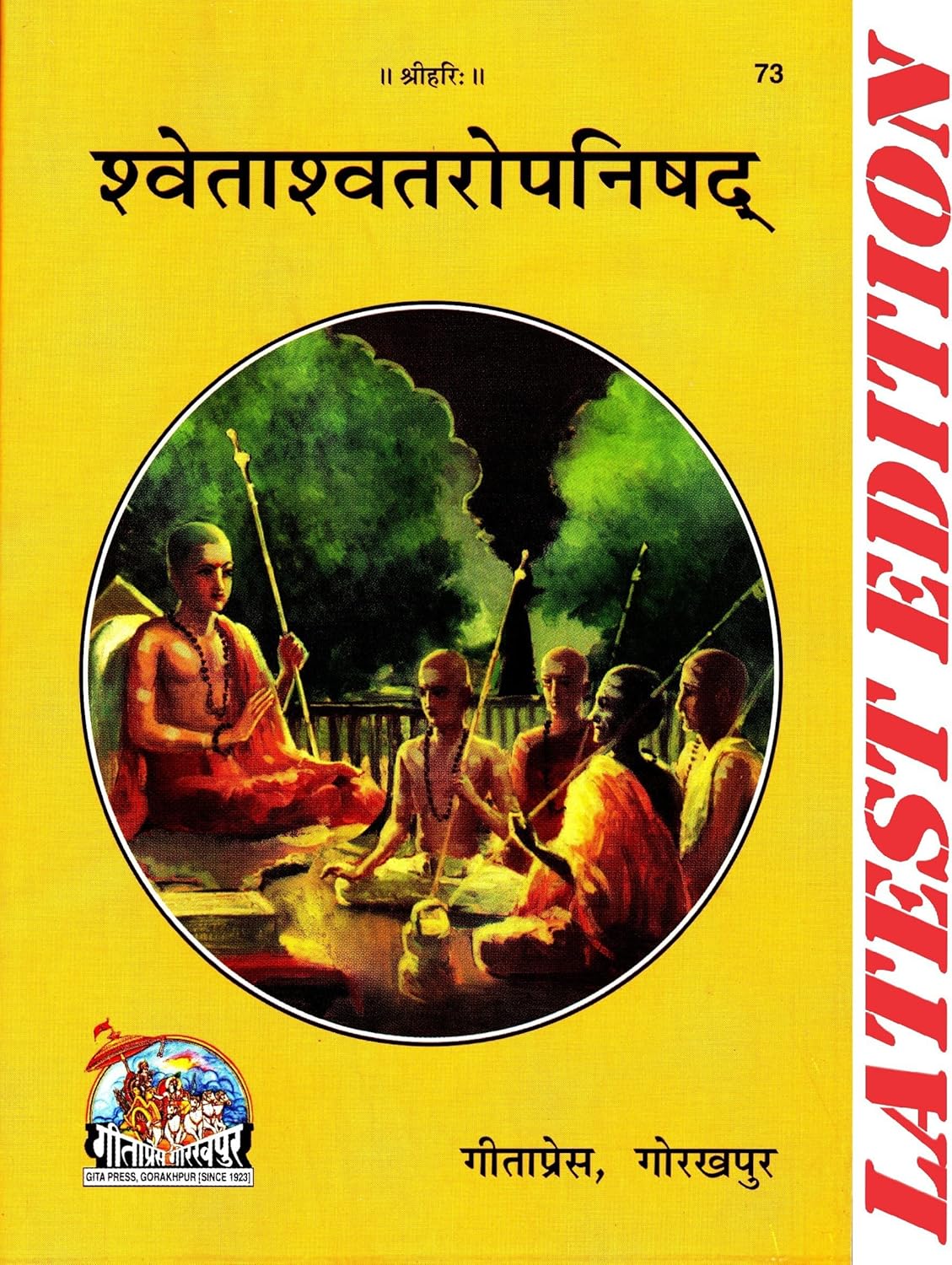
Image with text
Pair text with an image to focus on your chosen product, collection, or blog post. Add details on availability, style, or even provide a review.
-
Free Shipping
Pair text with an image to focus on your chosen product, collection, or blog post. Add details on availability, style, or even provide a review.
-
Hassle-Free Exchanges
Pair text with an image to focus on your chosen product, collection, or blog post. Add details on availability, style, or even provide a review.